The pump needs a supply
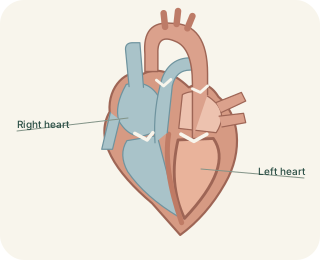
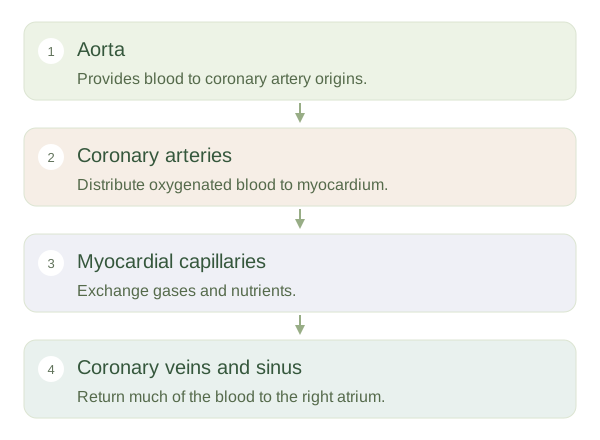
The heart moves blood for the whole body, but its working muscle also needs oxygen and nutrients. The blood passing through the chambers cannot diffuse far enough to supply the thick ventricular wall adequately. Coronary arteries therefore deliver blood directly to the through a branching vessel network. The right and left coronary arteries arise near the beginning of the aorta, just beyond the aortic valve. Their branches run over the heart’s surface and send smaller vessels into the muscle. Coronary veins collect much of the returning blood.
Coronary Circulation
 Open diagram larger ↗
Flow changes during each beat
When ventricular muscle contracts, it compresses vessels within the wall. This effect is particularly important in the left ventricle, so much left ventricular coronary perfusion occurs during diastole, when the muscle relaxes. Coronary flow is also regulated to match metabolic demand. During increased cardiac work, local mechanisms normally increase supply. Faster heart rates shorten the time available for relaxation, while aortic pressure and pressure inside the influence the driving gradient. The coronary circulation therefore depends on both vessel patency and the changing pressures generated by the heart itself.
When supply cannot meet demand
means inadequate blood supply for a tissue’s needs. If a becomes severely narrowed or suddenly blocked, the supplied may receive insufficient oxygen. Persistent severe ischaemia can cause tissue death, called . The exact effect depends on the vessel territory, duration and alternative supply. Coronary territories vary between people, so simple diagrams are approximations rather than universal maps. Most coronary venous blood reaches the right atrium through the coronary sinus, though other venous routes also exist. Follow the essential loop: aorta to coronary arteries, myocardial exchange and venous return. This separate supply enables the pump to keep serving every other organ.