Exchange across a thin wall
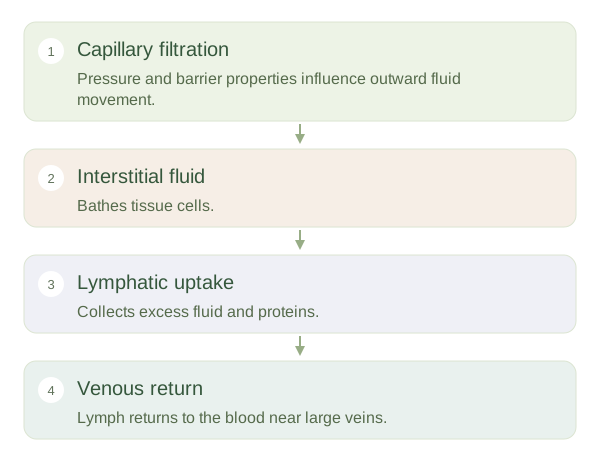
Capillaries connect blood with the interstitial fluid surrounding cells. Oxygen and carbon dioxide diffuse according to their partial-pressure differences, while nutrients and wastes move through pathways determined by size and vessel permeability. Water also moves across the capillary wall. tends to push fluid outward, while plasma proteins contribute an opposing oncotic effect. The balance varies along vessels and among tissues. Capillaries are not identical open sieves: endothelial barriers and their surface glycocalyx help determine which substances and how much fluid can cross.
Capillary Exchange and Oedema
 Open diagram larger ↗
Fluid return involves lymph
A useful modern model recognises that many capillary beds have net filtration during steady conditions, with lymphatic vessels returning excess filtered fluid and escaped proteins to the circulation. It is misleading to assume that all fluid pushed out at the arterial end is routinely sucked back in at the venous end. Some reabsorption can occur in particular conditions, but lymphatic return is essential. The lymphatic system begins in tissues, carries fluid through vessels and nodes and ultimately returns it to large veins. Its capacity helps prevent everyday filtration from producing progressive swelling.
Why swelling develops
is excess fluid in the interstitial spaces. It can result from increased capillary , reduced plasma protein-related restraint, increased permeability or impaired lymphatic drainage. Inflammation, for example, can increase leakage of fluid and proteins, while venous obstruction raises upstream pressure. These mechanisms can combine. Oedema is therefore a finding with several possible explanations, not a diagnosis by itself. Location also matters: fluid in a limb and fluid around an organ occupy different compartments. The conceptual test is to follow the balance—what favours movement into the tissue, what limits it and how efficiently can the fluid leave?