A surface built for diffusion
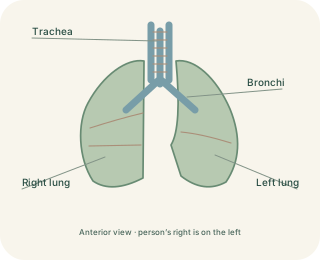
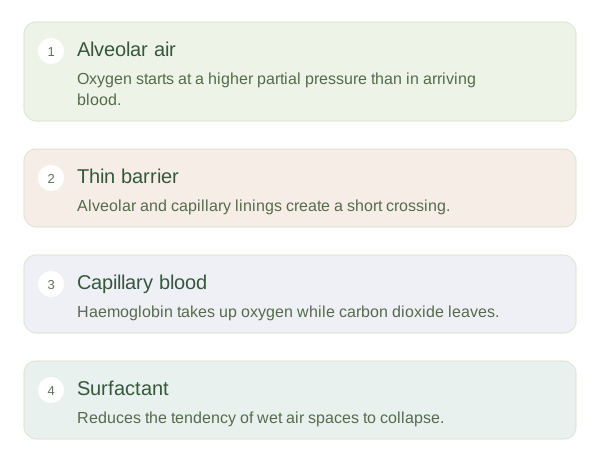
Alveoli are tiny air spaces at the ends of the respiratory tree. Groups of them give the lungs a vast internal surface without needing a huge chest. Each is closely associated with capillaries, the smallest blood vessels. Oxygen moves from alveolar air into blood because its is normally higher in the air space. Carbon dioxide moves in the opposite direction. Partial pressure describes the contribution one gas makes within a mixture; it helps predict the direction of .
A large, thin, moist surface makes gas exchange efficient.
 Open diagram larger ↗
Keeping the crossing short
Most of the alveolar surface is formed by very thin type I cells. Oxygen crosses the alveolar lining, a thin supporting layer and the capillary lining before reaching blood. This short distance matters: a thicker barrier slows . Fluid accumulating between air and blood can therefore interfere with oxygen transfer even when air still enters the lungs. Exchange also requires enough surface area. Destruction of alveolar walls reduces the available area, as occurs in emphysema.
Keeping air spaces open
Alveoli have a moist lining, but water molecules pull towards one another. This surface tension tends to make small air spaces collapse. Type II alveolar cells release , a mixture that reduces surface tension and makes inflation easier. Surfactant is not an oxygen carrier; it supports the physical conditions that allow exchange. Alveolar macrophages help remove particles and microbes reaching these deep spaces. Finally, air delivery and blood delivery must both continue. An full of fresh air cannot contribute much if no blood reaches its capillaries. Likewise, blood passing an unventilated alveolus cannot gain its usual oxygen load. Efficient lungs combine a large surface, a short path, open air spaces and a continuing match between ventilation and blood flow.