More than calories
Carbohydrates, fats and proteins can provide energy, but a complete diet must also supply substances needed for structure and regulation. Vitamins are organic compounds required in relatively small amounts. Minerals are chemical elements needed for functions such as bone formation, fluid balance and electrical activity. They do not provide calories themselves. Water is also essential, supporting transport, reactions and temperature control. The amount of energy consumed therefore cannot describe nutritional adequacy by itself.
Adequate nutrition requires energy, building materials and small essential nutrients.
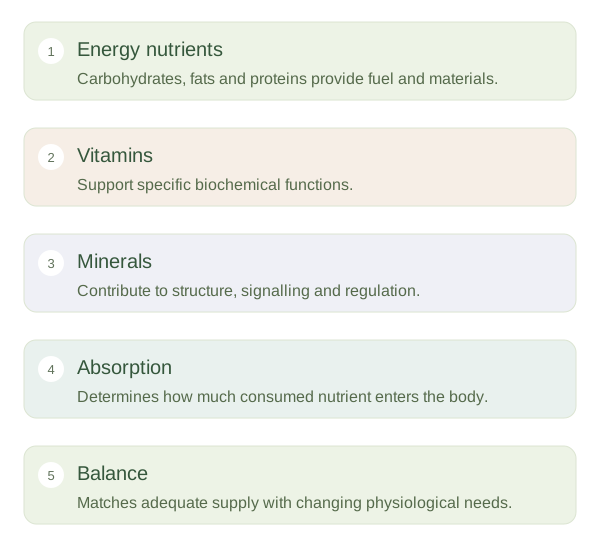 Open diagram larger ↗
Small amounts can have large effects
Some vitamins help enzymes carry out metabolic reactions. C supports collagen-related processes, while vitamin D participates in calcium regulation. Iron is needed for haemoglobin and other proteins; iodine is needed for thyroid hormone production. Calcium contributes to bone structure, signalling and muscle activity. can disrupt particular pathways even when enough energy is available. However, more is not always better: excessive amounts of some nutrients can also cause harm.
Absorption, storage and need differ
Fat-soluble vitamins include A, D, E and K, and their absorption is linked with fat handling. Water-soluble vitamins have different transport and storage patterns, with B12 being an important example of substantial storage despite being water-soluble. Nutrient needs vary across growth, pregnancy, ageing and illness. Balance is therefore about meeting appropriate needs over time, not finding one perfect food or assuming supplements automatically improve health. Digestive function also matters: a person may consume a nutrient but absorb it poorly because of intestinal disease or missing supporting factors. The useful framework asks what the substance does, where it comes from, how it is absorbed and whether supply matches demand. This connects nutrition with anatomy and physiology while avoiding the idea that every symptom can be solved by adding one vitamin.