A shared fuel supply
Glucose is an important fuel carried in blood. Its concentration changes as nutrients enter from the intestine and tissues take them up. Some tissues, including red blood cells, depend on glucose, and the brain normally uses a substantial supply. The pancreas contains small clusters of endocrine cells called islets. Beta cells release , while alpha cells release . These cells help coordinate fuel handling across several organs.
Glucose across a meal cycle
 Open diagram larger ↗
After a meal
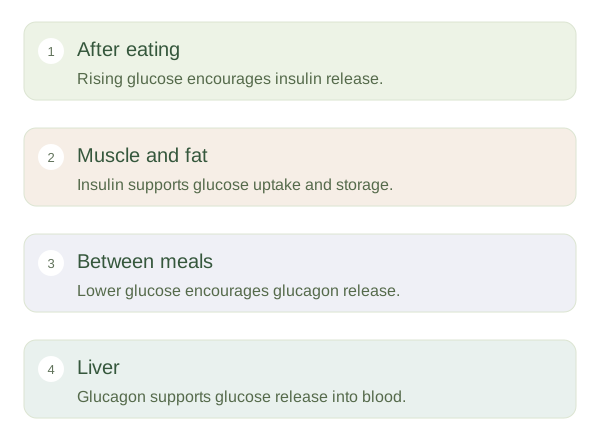
When blood glucose rises after eating, beta cells normally increase secretion. Insulin promotes movement of glucose transporters to the surface of many muscle and fat cells, helping glucose enter them. It also encourages storage, including formation, and reduces liver glucose output. Not every tissue needs insulin for glucose entry: brain cells and red blood cells use other transport arrangements. Insulin acts as a coordinator of nutrient use and storage rather than a universal key for every cell.
Between meals
When glucose falls, release usually increases. Its major target is the liver, where it encourages breakdown and glucose production from other starting materials. The liver can release this glucose into blood. Muscle glycogen primarily supplies the muscle itself; muscle does not make the same direct contribution to blood glucose as liver glycogen. Other hormones, including adrenaline and cortisol, also influence fuel availability, particularly during stress or prolonged fasting.
Balance depends on response
and have opposing effects on several pathways, but they are not simply switched completely on or off. Their balance shifts with meals, exercise and metabolic needs. Diabetes can involve insufficient insulin production, reduced tissue responsiveness or both. Understanding that distinction explains why high blood glucose is not always caused by eating sugar immediately beforehand. It reflects how the whole system is supplying, taking up and storing fuel over time.