Learning before the threat
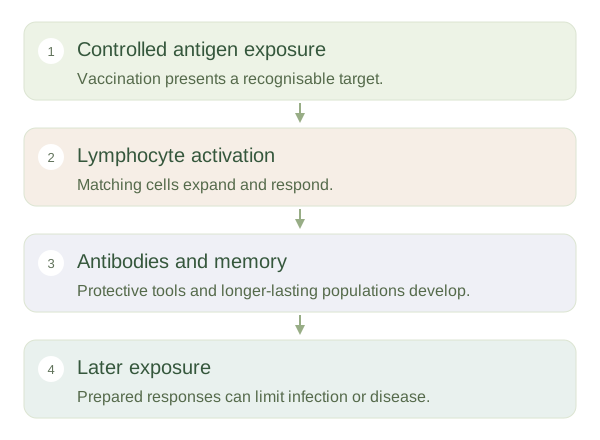
exposes the immune system to a controlled representation of a pathogen or its products. Depending on the vaccine, this may involve an inactivated organism, a weakened organism, selected components or instructions that allow cells to make a particular antigen. The aim is to stimulate useful immune responses without the risks of experiencing the full disease. Vaccine formulations and schedules differ because pathogens and immune responses differ.
Preparation and later response
 Open diagram larger ↗
From first response to memory
Antigen-presenting cells and lymphocytes interact after . Matching B and T cells can expand, some B cells become antibody-secreting plasma cells, and memory populations can persist. On later exposure, memory can allow a quicker and more effective response. Long-lived plasma cells may also maintain antibodies. The immune system does not remember an event as a brain remembers a story; memory here means lasting changes in the available immune-cell populations and response capacity.
Why protection is not all or nothing
Protection depends on the pathogen, vaccine, time since and individual factors. A vaccine may reduce infection risk, disease severity or both. Preventing severe disease does not necessarily mean preventing every brief infection at a surface such as the nose. doses can strengthen or renew responses, and some pathogens change in ways that affect recognition. These mechanisms explain why repeat doses can be useful without implying that the immune system learned nothing from earlier doses.
Active and passive protection
generally produces active immunity because the person's own immune system responds. means receiving ready-made antibodies, such as some maternal antibodies crossing the placenta or antibody products used in specific clinical settings. Passive protection can act quickly but does not by itself create the recipient's own lasting memory response. Understanding this distinction clarifies why having antibodies today and having durable are related but not identical. This article explains principles rather than selecting an individual vaccination schedule.