Molecules acting on biological targets
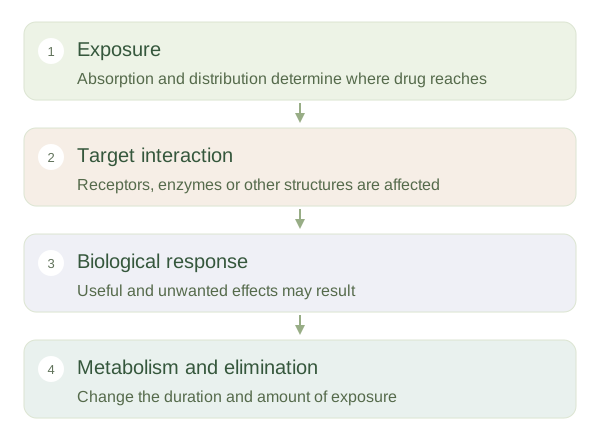
Many medicines work by interacting with proteins such as receptors, enzymes or transporters. An activates a receptor, while an prevents or reduces activation by another substance. Other medicines inhibit enzymes, alter ion channels or replace a missing substance. These descriptions explain mechanisms rather than guaranteeing a particular outcome. A receptor may appear in several tissues, and the same signalling pathway can serve different functions. A medicine therefore rarely behaves like a perfectly local switch acting only at the place where a symptom is noticed.
From a medicine to its effects
 Open diagram larger ↗
The body changes exposure
describes absorption, distribution, metabolism and elimination: what the body does to a medicine. describes its effects and mechanisms: what it does to the body. Liver enzymes may transform a drug, while kidneys help remove many drugs or their products. Age, genetics, organ function, food and other medicines can alter exposure. Some drugs need conversion into an active form. Dose and concentration are related but not identical, because the same dose can produce different concentrations in different people or at different times.
Benefits and unwanted effects share biology
A useful effect and a side effect can arise from the same target in different tissues, or from action at additional targets. Some antihistamines, for example, can affect alertness when they reach relevant brain pathways. An adverse effect is not automatically an allergy; allergy involves an immune mechanism. Interactions can increase or decrease drug exposure or combine physiological effects without changing concentration. The therapeutic window describes an exposure range in which benefit can be achieved with acceptable risk, but it varies between drugs and situations. Understanding these principles helps explain labels and monitoring without providing a basis for choosing or changing personal doses independently.