The lungs need a pressure change
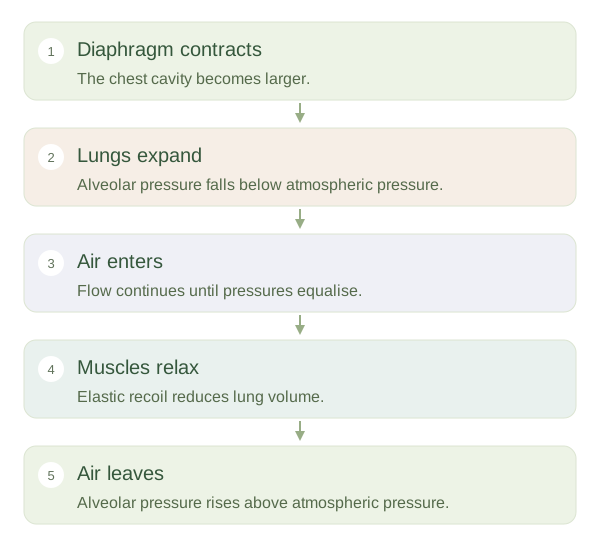
Air does not enter simply because the body needs oxygen. It moves when pressure inside the alveoli differs from atmospheric pressure. Increasing the volume occupied by a gas tends to lower its pressure if other conditions stay similar. During , the diaphragm contracts and moves downward. The external intercostal muscles help lift and expand the ribs. These actions enlarge the chest, changing pleural pressure and expanding the lungs. Alveolar pressure falls slightly below atmospheric pressure, and air flows inward.
Air follows pressure differences created by changes in chest volume.
 Open diagram larger ↗
Quiet expiration uses recoil
At the end of an ordinary , airflow stops when alveolar and atmospheric pressures become equal. The diaphragm then relaxes. Elastic lung tissue and surface tension tend to reduce lung volume, raising alveolar pressure above atmospheric pressure. Air flows out. Quiet is therefore mainly passive, although breathing always involves active control. During a forceful expiration, abdominal muscles and other expiratory muscles can help increase pressure and push air out more quickly.
Effort depends on resistance and stretch
Not every chest expands equally easily. describes how much lung volume changes for a given pressure change. A stiff lung has low compliance and requires more effort to expand. is a different property: narrowed passages impede airflow even if the lung tissue stretches normally. A drinking straw illustrates resistance, while a stiff balloon illustrates reduced compliance. These are separate obstacles and may occur together. Effective ventilation depends on pressure generation, open airways, working respiratory muscles and an intact pleural connection. Breathing muscles move the chest; the resulting pressure differences move air. They do not pull oxygen selectively into the blood, and the lungs do not actively suck in air using their own skeletal muscle.