A relay that also shapes information
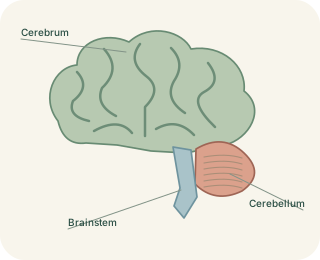
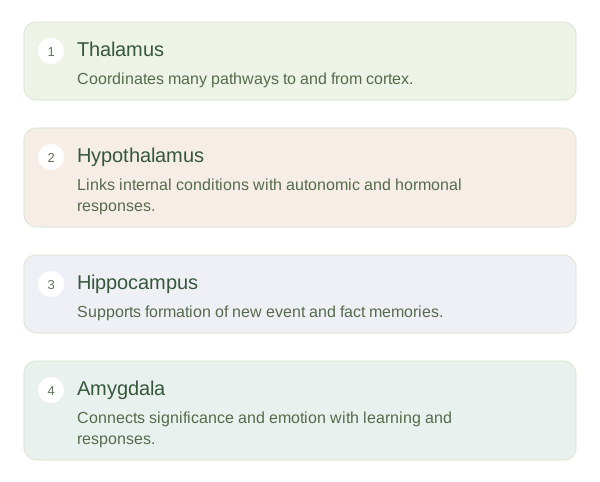
The sits deep in the brain, above the brainstem. Most sensory pathways reaching the cerebral cortex pass through thalamic nuclei, although smell has a different initial route. Calling the thalamus a relay is useful, but incomplete: it also helps select and coordinate information, and participates in motor and attention-related circuits. Different nuclei have different connections. It is not a single switch through which all sensations pass unchanged.
Deep brain networks link information with internal needs and experience.
 Open diagram larger ↗
Coordinating the internal body
The lies below the and helps maintain homeostasis. It integrates information about temperature, energy availability, fluid balance and other internal conditions. Through autonomic connections and control of the pituitary gland, it can influence both rapid neural responses and slower hormonal responses. For example, water balance involves sensing changes in body-fluid concentration, generating thirst and regulating antidiuretic hormone release. The hypothalamus also contains the suprachiasmatic nucleus, an important organiser of daily biological rhythms.
Memory and emotional significance
Structures often discussed within limbic networks include the and , together with connected cortical and deeper regions. The hippocampus is important for forming many new memories of events and facts. The amygdala contributes to learning about emotionally significant stimuli, including threats. Neither is a simple storage box for every memory or an isolated fear button. Their connections help explain why experiences can influence bodily responses and why emotion can change what we remember. A frightening sound may involve auditory pathways, recognition networks, autonomic changes and remembered context. These processes do not occur in a single neat line. Understanding the deep brain means following interactions between external information, internal regulation and past experience rather than assigning each structure one exclusive mental function.