A first major checkpoint
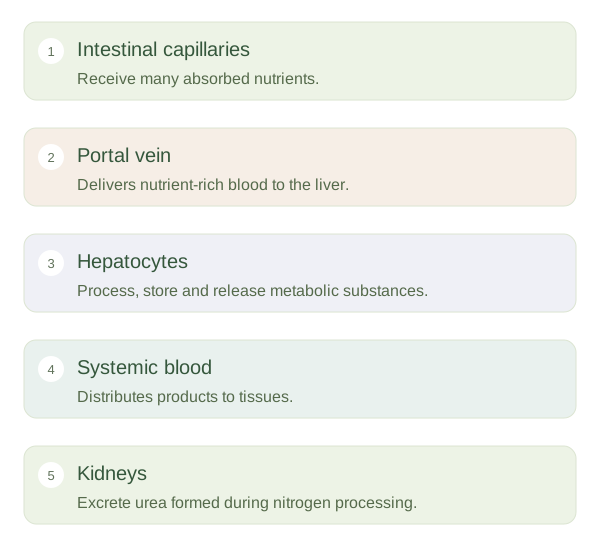
Many nutrients absorbed into intestinal blood travel through the before entering the wider circulation. This brings the liver into close contact with a meal’s absorbed products. Blood also arrives through the hepatic artery, supplying oxygen. Inside the liver, blood passes through specialised channels called sinusoids, where liver cells exchange substances with it. The arrangement supports processing, but it does not mean the liver must destroy everything arriving from the gut.
The liver adjusts, stores and redistributes absorbed nutrients.
 Open diagram larger ↗
Storing and releasing fuel
After a carbohydrate-containing meal, the liver can take up glucose and store some as . Between meals, it can break glycogen down and produce new glucose from suitable precursors. These actions help maintain blood glucose for tissues that need a reliable supply. The liver also processes fats and amino acids, makes many circulating proteins and packages lipids for transport. It cannot store unlimited carbohydrate, and it does not create energy from nothing; it changes the form and distribution of chemical resources.
Handling nitrogen and other substances
When amino acids are used in metabolism, their nitrogen must be handled safely. The liver converts much potentially harmful ammonia into , which the kidneys can excrete. It also processes bilirubin and many medicines and other substances. Processing can make a compound easier to eliminate, but some transformations can create active or harmful products, so detoxification is not a universal on-off cleaning function. The liver’s many tasks are regulated by hormones and nutrient availability. Its position between gut and systemic circulation explains why digestion, blood chemistry and kidney excretion are connected. A useful picture is a metabolic distribution centre: incoming materials are inspected, transformed, stored or released according to the body’s needs.