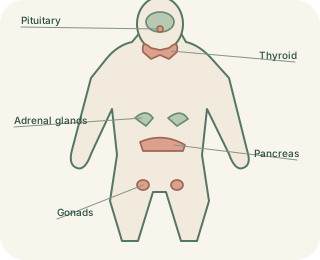
Two glands within one outline
An adrenal gland sits near the upper pole of each kidney. Its outer cortex and inner medulla differ in origin, structure and function. Their position beside the kidney does not make them urine-producing organs. Instead, both regions release hormones into the blood. The cortex makes steroid hormones from cholesterol, while the medulla contains specialised cells related to the sympathetic nervous system.
Adrenal regions and messages
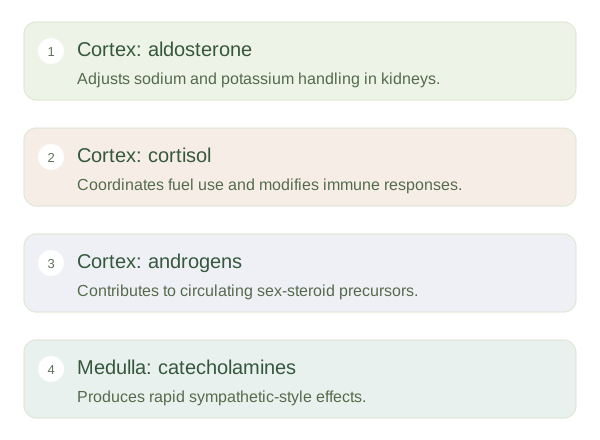 Open diagram larger ↗
The cortex: salt and energy
The outer cortical zone produces , which increases sodium reabsorption and potassium secretion in parts of the kidney. Water often follows retained sodium, contributing to control of circulating volume and blood pressure. Aldosterone release is strongly influenced by the renin–angiotensin system and blood potassium. A deeper zone produces , which helps coordinate fuel availability, supports vascular responses and modifies immune activity. Cortisol release is regulated largely through hypothalamic signals and pituitary ACTH, with negative feedback. The cortex also produces adrenal androgens.
The medulla: a rapid response
The releases adrenaline and noradrenaline when stimulated by sympathetic nerves. These catecholamines help prepare the body for action: heart activity can increase, airways widen and stored fuels become more available. Different tissues respond differently according to their receptors. The medulla extends sympathetic signalling through the bloodstream, so its effects complement direct nerve activity rather than replacing it.
Keeping the pathways separate
The cortex and medulla can participate in the same stressful event, yet they do not share one simple control switch. A quick sympathetic response may begin within seconds, while cortisol-related changes have a different timing and regulation. Remembering the regions prevents confusion between and adrenaline: one mainly adjusts kidney salt handling, while the other helps produce a rapid whole-body response. Both require appropriate regulation; more hormone is not automatically better for health or performance.