Different stations in one defence system
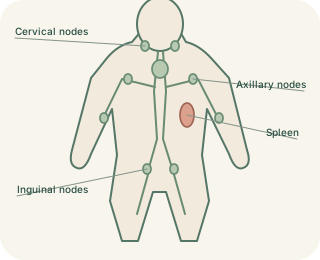
Lymphoid organs provide organised spaces where immune cells develop, meet signals and coordinate responses. They are not interchangeable filters. Their structure reflects what reaches them and which cells they support. The bone marrow is a major source of blood and immune cells. The is another primary lymphoid organ, while lymph nodes and are secondary lymphoid organs where mature immune cells can respond to encountered material.
Three organs, three main contexts
 Open diagram larger ↗
Lymph nodes inspect tissue drainage
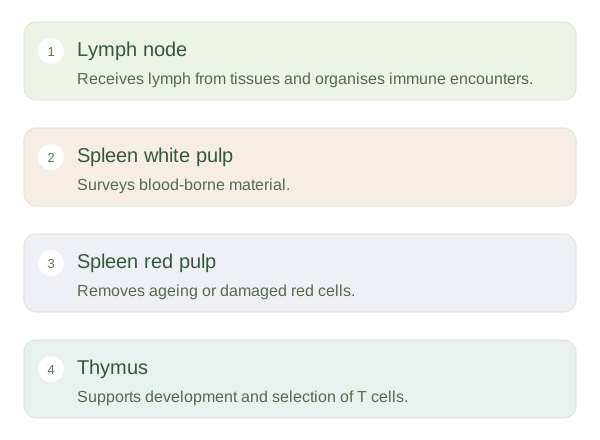
Lymph nodes lie along collecting lymphatic vessels. Incoming lymph carries substances and cells from a particular drainage region into a network of spaces within the node. Macrophages and other cells can capture material, while specialised zones organise encounters between lymphocytes and antigen-presenting cells. Several incoming vessels and fewer outgoing routes help channel this traffic. Nodes can enlarge during immune activity, but enlargement has many possible causes and does not by itself identify a specific infection or disease.
The spleen surveys blood
The sits in the upper left abdomen. Unlike a , it filters blood rather than incoming lymph. Its white pulp contains organised immune tissue that can respond to blood-borne material. Its red pulp helps remove ageing or damaged red blood cells and recycle their components. These tasks explain why the spleen links immunity with blood-cell maintenance. It does not simply store all the body's blood or replace the liver's many metabolic functions.
The thymus educates T cells
The lies mainly behind the upper sternum and is particularly active in childhood. Developing T cells undergo selection there, helping produce a population that can recognise appropriate signals while limiting harmful self-reactivity. Many developing cells do not survive selection. The thymus becomes less prominent with age, but its earlier role remains important. Following the material being processed—lymph, blood or developing cells—makes the differences between these organs easier to remember.