Two different kinds of failure
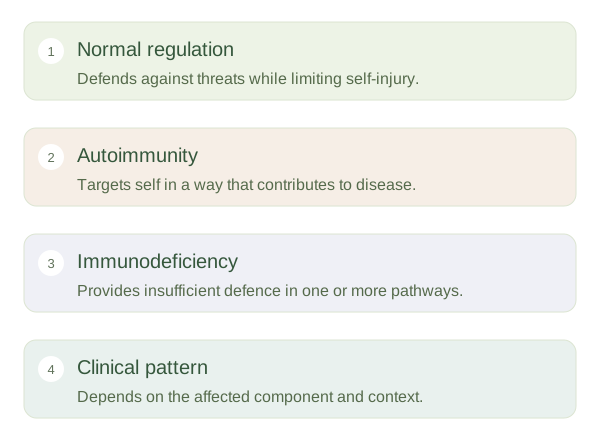
An effective immune system must recognise threats while limiting harmful attacks on the tissues of the same body. and describe different failures of that balance. In autoimmunity, responses against self contribute to disease. In immunodeficiency, one or more components of defence are absent or function inadequately. They are not simply opposite readings on a single strong-versus-weak scale, and both can sometimes occur in the same individual.
Direction, capacity and regulation
 Open diagram larger ↗
When self-tolerance fails
Developing lymphocytes undergo selection, and additional control mechanisms restrain self-reactive cells later in life. This protection is called . It is imperfect: genetic susceptibility and environmental influences can contribute to its breakdown. Autoantibodies, T cells or both may then injure tissues. Some autoimmune diseases mainly affect one organ, such as pancreatic beta-cell destruction in type 1 diabetes, while others affect several systems. is different from an allergy to an external substance.
When defence is insufficient
may be inherited or acquired. It can involve antibodies, T cells, phagocytes, complement or combinations of components. Because these tools have different jobs, the pattern of infections can differ. HIV, for example, can damage helper T-cell function and progressively impair coordinated immunity if untreated. Some medications deliberately suppress immune activity for therapeutic reasons, while malnutrition and other illnesses can also affect defence. Repeated infection alone does not identify the exact defect.
Why the distinction helps
Autoimmune inflammation can itself damage tissues, while treatments that restrain an unwanted response can change infection risk. Understanding the mechanism therefore requires asking which component is involved, what it is targeting and whether regulation is working. Neither condition means a person lacks every immune function. Broad claims that a product boosts immunity ignore this complexity: increasing the wrong activity would not necessarily help and could worsen misdirected responses. This lesson explains categories rather than diagnosing symptoms or recommending immune treatment.