Appendages of the surface
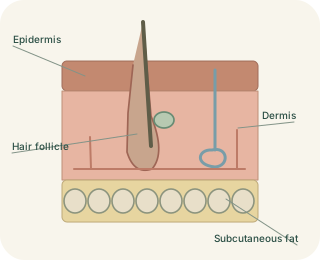
Hair, nails and skin glands are often called accessory structures or appendages. They develop from epidermal tissue, although parts of them extend into the dermis or deeper. Their positions and distributions differ across body regions. Palms and soles, for example, have abundant sweat glands but no hair follicles. These structures do not merely decorate the skin: they support protection, sensation, grip and temperature regulation.
Skin appendages and their jobs
 Open diagram larger ↗
Hair and nails
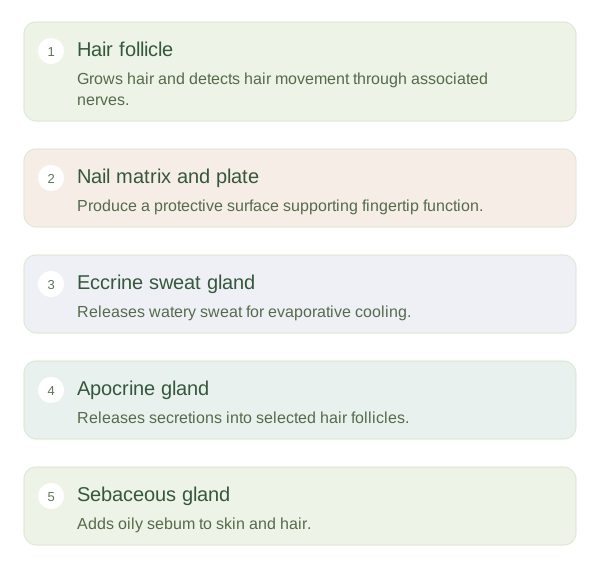
A surrounds a growing hair root. Dividing cells near the bulb contribute to the shaft, which consists of keratinised material above the surface. Pigment helps determine hair colour. Sensory nerves around follicles detect movement, while small arrector pili muscles can produce goosebumps. Nails are hard keratin plates formed by growth in the . The nail bed supports the plate, and the rigid surface helps protect fingertips and improve fine handling by providing counterpressure.
Sweat glands
Eccrine sweat glands release watery fluid onto the skin through ducts. Evaporation removes heat, making them important in temperature regulation. Sweat production alone is not enough: fluid must evaporate to provide effective cooling. Apocrine glands are concentrated in selected regions, including the axillae, and usually open into hair follicles. Their secretions can be broken down by skin bacteria, contributing to body odour. The glands and bacteria are part of normal skin biology; odour is not simply evidence that the body is eliminating toxins.
Oil and the surface barrier
Sebaceous glands usually release into hair follicles. This oily secretion helps lubricate skin and hair and contributes to the surface environment. Blockage and inflammation of the follicle–gland unit can contribute to acne. A structure's location helps explain its effects: a gland opening onto the surface acts differently from one emptying into a follicle. Together, appendages support the larger skin barrier while also creating specialised routes through which secretion and sensation occur.