Pressure is necessary, excess pressure is costly
Blood pressure is the force exerted by circulating blood against vessel walls. reflects the higher arterial pressure during ventricular ejection; reflects the lower pressure between beats. Pressure depends on cardiac output, and the properties of the arteries. It normally changes with activity, sleep, emotion and other conditions. Hypertension means blood pressure remains above an appropriate diagnostic threshold over time, assessed with suitable measurements. One unusual reading does not automatically establish a persistent disorder or reveal its cause.
Sustained pressure load
 Open diagram larger ↗
Why organs are affected
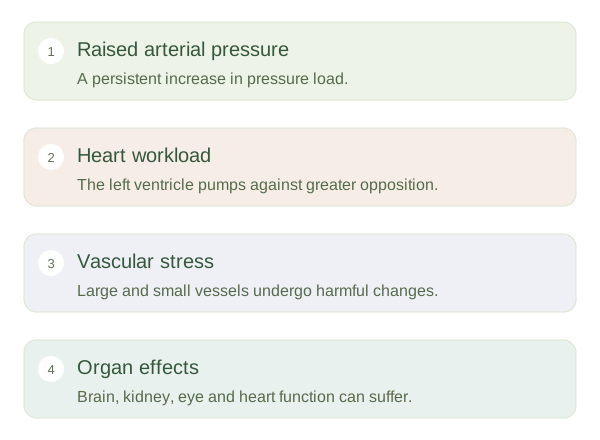
Sustained high pressure increases the workload against which the left ventricle pumps. The heart may initially thicken its muscle wall, but long-term adaptation can become harmful. High pressure also stresses arteries and small vessels, contributing to vascular damage in organs such as the brain, kidneys and eyes. Kidney disease can both result from and contribute to hypertension because kidneys influence salt, water and hormone control. This creates feedback between circulation and renal function. The harm is not simply that blood moves too quickly; it involves pressure, vessel biology and organ responses.
Several mechanisms can contribute
Most hypertension reflects interacting influences rather than one identifiable abnormal organ. Genetics, age-related arterial changes, salt handling and other factors contribute. Some cases have a more specific secondary cause, including certain kidney or endocrine disorders. Hypertension often produces no clear symptoms, which is why measurements matter. Diagnosis and management depend on clinical context rather than a universal symptom checklist. The core physiological idea is sustained load: tissues may tolerate short pressure changes during normal life, but prolonged excess can gradually alter vessels and impair organs that rely on a delicate microcirculation.