Oxygen transport depends on haemoglobin
inside red blood cells binds most of the oxygen carried in blood. is generally identified by a haemoglobin concentration below the appropriate reference range for the person and circumstances. The blood may still be well oxygenated in percentage terms, yet carry less total oxygen because there is less haemoglobin available. This distinction helps explain why a normal oxygen-saturation reading does not exclude anaemia. The underlying problem concerns carrying capacity, not necessarily failure of oxygen to cross from the lungs into the blood.
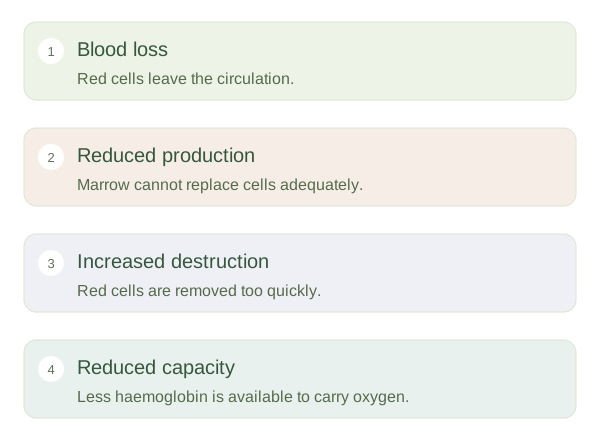
Three mechanisms of anaemia
 Open diagram larger ↗
Three broad routes to the same result
can arise from blood loss, reduced production of red cells or increased destruction of them. Iron deficiency can limit production, while vitamin B12 or folate deficiency can impair normal cell development. Chronic inflammation or kidney disease can reduce effective production through other mechanisms. In , red cells are destroyed faster than they can be replaced. Bleeding removes cells from circulation. These processes require different explanations, so assuming every anaemia is caused by insufficient dietary iron misses important possibilities. Several causes may also coexist.
How the body responds
Tissues may receive less oxygen during activity, producing fatigue, shortness of breath or reduced exercise tolerance. The heart may compensate by increasing output, but symptoms depend on severity, speed of onset and other conditions. A full blood count measures and red-cell indices, while a smear provides information about cell appearance. Additional investigations explore the mechanism rather than stopping at the label. Small, large or unusually shaped cells are clues, not complete diagnoses. The central lesson is to separate the finding of from its cause, then connect that cause to production, loss or destruction of oxygen-carrying cells.