A problem of glucose regulation
Diabetes mellitus describes conditions in which blood glucose remains abnormally high because insulin production, insulin action or both are insufficient. Insulin is released by pancreatic beta cells and helps coordinate glucose use and storage, while restraining glucose release from the liver. It does not act as a universal key for every body cell: some tissues take up glucose without requiring insulin in the same way. The central problem is disrupted regulation across organs, rather than sugar simply being unable to enter any cell.
Two common routes to high blood glucose
 Open diagram larger ↗
Different mechanisms, a shared result
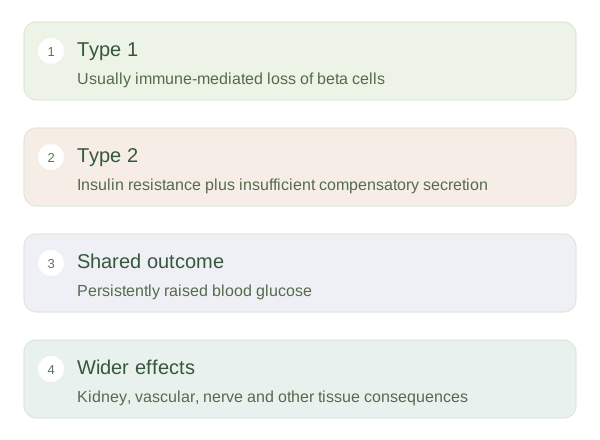
In type 1 diabetes, immune-mediated destruction of beta cells usually causes severe insulin deficiency. It can begin at different ages. In type 2 diabetes, tissues become less responsive to insulin and beta cells cannot maintain enough secretion to compensate. Genetics, age, body composition and other factors influence risk; a diagnosis cannot be reduced to a judgement about personal choices. develops during pregnancy when insulin supply does not meet altered metabolic demands. These categories share elevated glucose but differ in their underlying mechanisms and clinical management.
Why high glucose affects more than energy
When glucose rises sufficiently, the kidneys may lose glucose in urine. Water follows, which can contribute to increased urination and thirst. Symptoms are variable, and type 2 diabetes may be present before obvious symptoms appear. Over time, metabolic and vascular changes can damage the eyes, kidneys, nerves and cardiovascular system. reflects glucose exposure over recent months, although some blood conditions affect its interpretation. Diagnosis uses defined tests and clinical context rather than symptoms alone. Understanding the insulin–liver–muscle relationship explains why diabetes influences many systems rather than only the pancreas.