Inflammation is not one specific cause
means inflammation of the liver. Viruses can cause it, but so can autoimmune processes, medicines, alcohol and other injuries. Different hepatitis viruses have different transmission patterns and clinical courses, so the word hepatitis does not by itself specify how a condition was acquired. Acute inflammation may resolve, while some causes persist. Liver cells perform metabolic processing, protein synthesis and bile-related tasks, so inflammatory injury can affect several functions. However, early disease may be present without obvious jaundice or other visible signs.
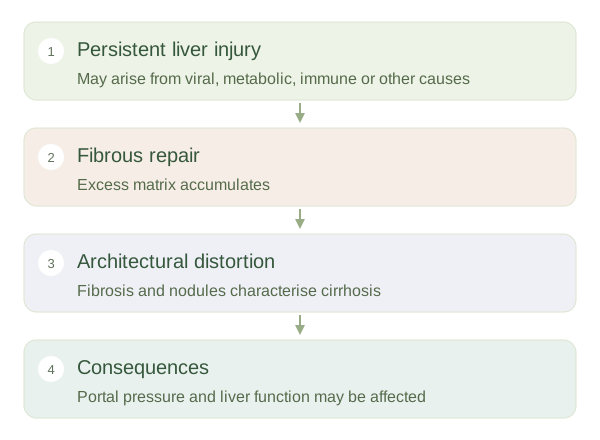
From persistent injury to altered liver function
 Open diagram larger ↗
Repeated injury changes the architecture
Persistent injury can activate tissue-repair pathways that deposit fibrous material. Cirrhosis develops when widespread and regenerative nodules distort normal liver architecture. It is more than a few isolated scars. Distorted tissue can resist blood flow through the liver, raising pressure in the portal venous system. This may contribute to enlarged collateral veins and fluid accumulation. Cirrhosis can arise from several chronic diseases, including metabolic dysfunction-associated steatotic liver disease, chronic viral and alcohol-associated liver disease. It should not be assumed to have only one cause.
Function and blood flow both matter
A cirrhotic liver may initially maintain many functions, described as compensated disease. Later complications can reflect reduced protein synthesis, impaired processing of substances, disturbed bile handling or increased portal pressure. Albumin, clotting factors and bilirubin therefore provide different kinds of information. Liver enzyme levels mainly reflect aspects of injury and are not a complete measure of remaining function. Treating an underlying cause can improve outcomes and sometimes permit regression of , but advanced architectural change can leave continuing risks. The key distinction is inflammation as an injury process versus cirrhosis as a pattern of structural reorganisation with functional consequences.