Two different ways a lining is injured
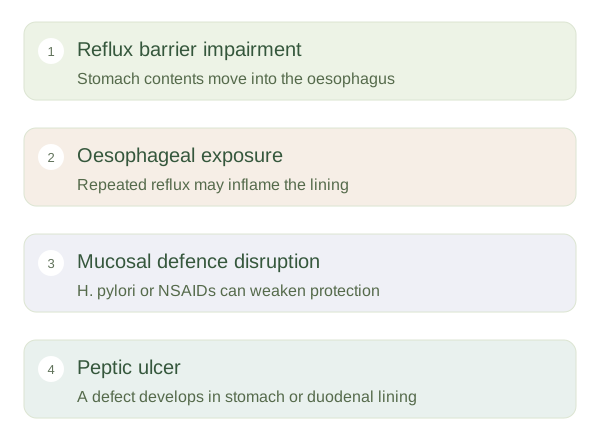
occurs when stomach contents move back into the oesophagus. A lower oesophageal sphincter region and support from the diaphragm normally help limit this movement. Occasional reflux can occur without established disease. Gastro-oesophageal reflux disease develops when reflux causes troublesome repeated symptoms or complications. The oesophageal lining is less protected against stomach contents than the stomach lining, so repeated exposure can cause inflammation. Acid is important, but reflux is fundamentally a problem of material moving across a boundary in the wrong direction.
Two mechanisms of upper digestive injury
 Open diagram larger ↗
An ulcer is a deeper defect
A is a sore extending into the lining of the stomach or duodenum. The stomach normally uses mucus, bicarbonate, blood flow and cellular repair to defend itself from acid and enzymes. infection and nonsteroidal anti-inflammatory medicines are common causes of disrupted defence and ulcer formation. Spicy food is not the usual underlying cause, although it can alter symptoms in some people. and ulcers can both cause upper digestive discomfort, but they differ in location, mechanism and the investigations needed to clarify their cause.
Symptoms are clues, not labels
Heartburn often feels like burning behind the breastbone, while ulcers may cause upper abdominal discomfort or have few symptoms. Symptom overlap means neither pattern is a reliable self-diagnosis, and chest discomfort can have causes outside the digestive system. Persistent injury can lead to complications such as bleeding or narrowing, depending on the condition. Clinical assessment may use history, targeted tests or endoscopy rather than assuming all burning means excess acid production. The useful distinction is between failure of a barrier and breakdown of local . Both connect anatomy with the chemistry of digestion.