Growth and maturation differ
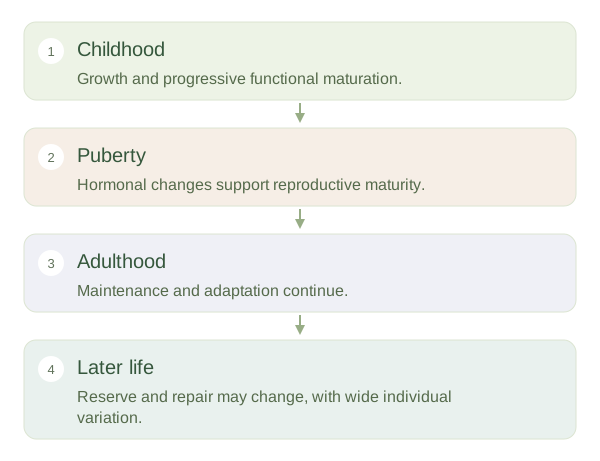
is an increase in body size, while is the development of functional capabilities. They often occur together but are not identical. A child’s bones lengthen at growth plates, muscles increase in size and neural circuits become more coordinated. Different tissues follow different schedules. Puberty adds hormonal changes that influence reproductive maturity, body composition and growth. Nutrition, health, inherited factors and the surrounding environment all affect development. A single measurement such as height cannot describe the maturity or health of every organ system.
Growth and Ageing
 Open diagram larger ↗
Adult tissues keep changing
Reaching adulthood does not mean the body becomes static. Bone is remodelled, skin renews, blood cells are replaced and muscles adapt to use. gradually changes many repair, signalling and maintenance processes. Some tissues accumulate damage or lose cells that are difficult to replace. Blood vessels can become less compliant, muscle mass may decline and bone balance can shift towards loss. These tendencies vary and are influenced by activity, illness and other factors. They describe broad patterns, not a fixed timetable that every person follows.
Reserve and individual variation
is the extra capacity available beyond ordinary daily needs. Two people may perform a resting task similarly but respond differently to illness or intense exertion because their reserves differ. Age-related changes can reduce reserve without immediately preventing normal daily function. also differs from disease: a condition may become more common with age while still requiring its own explanation. Avoid assuming that a symptom is inevitable simply because somebody is older. When comparing life stages, consider structure, function, adaptation and context together. This helps explain both shared biological trends and the large differences among individuals of the same chronological age.