After a meal: use and storage
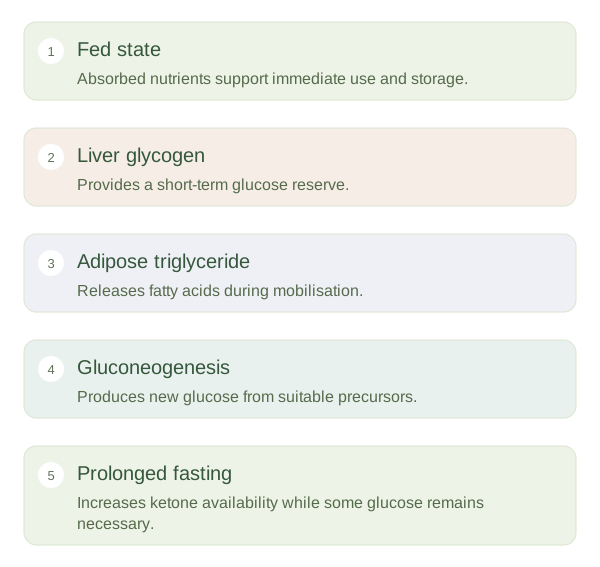
Following a meal, absorbed nutrients become available and signalling generally increases. Insulin promotes glucose uptake in tissues such as skeletal muscle and adipose tissue, while helping coordinate storage and use of nutrients. The liver and muscles can store glucose as . Excess energy can also be stored in adipose tissue as triglyceride. Not every tissue uses exactly the same transporter or fuel, and some glucose uptake continues without insulin-dependent mechanisms.
The body switches fuel handling to maintain supply between meals.
 Open diagram larger ↗
Between meals: mobilisation
As the absorptive supply fades, hormone signals change. The liver breaks down and makes glucose from substances such as lactate, glycerol and certain amino acids. Adipose tissue releases fatty acids that many tissues can use for energy. is particularly important in regulating liver glucose output. With more prolonged fasting, the liver produces more ketone bodies from fatty-acid-derived material, and the brain can use a greater proportion of these fuels. Red blood cells still require glucose because they lack mitochondria.
Balance across time matters
Fed and fasting states are not completely separate switches; the body continuously adjusts pathways according to activity, illness, hormones and the time since eating. Muscle mainly supports that muscle’s own work, whereas liver glycogen can help sustain blood glucose. Stored fat provides a larger long-term energy reserve, but cannot replace every function of glucose or dietary nutrients. Protein is primarily functional tissue, although amino acids can also be used metabolically. Understanding these relationships prevents the misleading idea that all stored fuels are interchangeable or that metabolism stops during sleep. The purpose of changing fuel use is continuity: cells must keep working whether nutrients are currently arriving from the intestine or being released from internal reserves.