Ultraviolet light meets skin
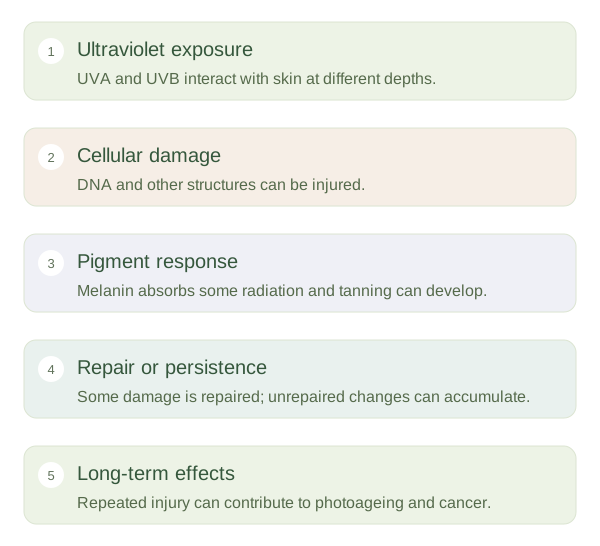
Sunlight contains that interacts with skin cells. UVB acts strongly in the epidermis and can directly damage DNA, while UVA penetrates more deeply and contributes to oxidative damage and ageing changes. The distinction is not absolute: both can contribute to injury and cancer risk. Visible warmth is not a reliable measure of ultraviolet exposure, because heat and ultraviolet radiation are different parts of the environmental picture.
Pigment and ultraviolet damage
 Open diagram larger ↗
Melanin and natural variation
Melanocytes in the epidermis produce within structures called melanosomes. These are transferred to neighbouring keratinocytes, where pigment helps shield cellular components, including DNA. Differences in melanin type, production and distribution contribute to skin-colour variation. The number of melanocytes alone does not explain the range of human pigmentation. All skin tones contain cells capable of ultraviolet damage; higher pigmentation provides some protection but does not remove risk.
Tanning is a response
Ultraviolet exposure can change existing pigment and stimulate further production. A tan therefore indicates biological responses to exposure, not proof that no damage occurred. Repeated exposure can alter dermal collagen and elastic tissue, contributing to . If DNA damage is not repaired accurately, mutations can accumulate. Different skin cancers arise from different cell types, including basal cells, squamous cells and melanocytes. A change in appearance alone does not identify which process is present.
Useful sunlight biology has limits
Skin can begin vitamin D production after appropriate UVB exposure, with later activation steps involving the liver and kidneys. This function does not mean unlimited exposure is beneficial. The balance depends on many factors, including location, skin, clothing and health, so a universal exposure prescription would be misleading. The central concept is that pigment, DNA repair and immune surveillance provide layers of protection, but none makes repeated ultraviolet injury harmless. Prevention and assessment guidance should come from appropriate local health resources.