People are not identical diagrams
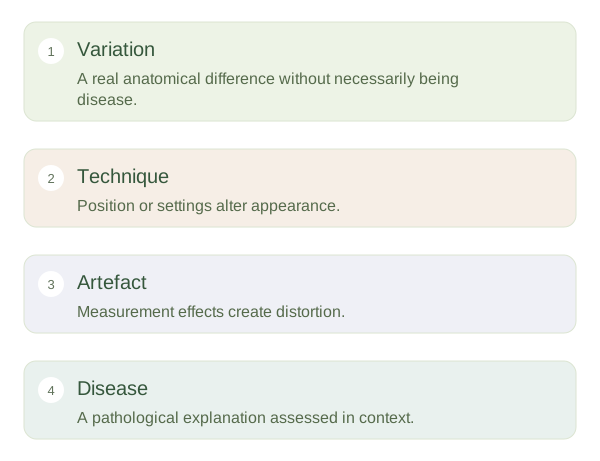
Normal anatomy varies in size, shape, position and branching. An extra vessel, a differently shaped sinus or unequal organ size may be a rather than a disorder. Age, body composition and previous surgery also influence appearances. A variant can still matter for planning a procedure, even when it causes no illness. Normal therefore does not mean identical to one illustration. Comparison with expected patterns is useful, but the final meaning depends on what the structure is, how it functions and the clinical situation.
Explaining an unexpected appearance
 Open diagram larger ↗
The image can add its own pattern
An is an appearance produced or altered by the imaging process rather than the true anatomy being represented. Movement can blur or duplicate edges. Metal can create streaks on CT or distort local MRI signals. Ultrasound may show shadowing behind bone or stones because little sound reaches deeper tissue. blends several materials within a voxel. These effects follow physical rules and sometimes provide useful clues, but they can also hide or mimic important findings. An image is a measurement with limitations, not a flawless transparent window.
Check before concluding
When an unexpected feature appears, ask whether it follows anatomy across neighbouring images, changes with another view or relates to known technical effects. Previous examinations can show whether it is longstanding. A second sequence, window or imaging method may answer a specific uncertainty, but additional testing is not automatically useful for every variant. Clinical interpretation combines the complete study, the reason for imaging and relevant background. For a beginner, the essential habit is to keep several explanations in mind. Difference is an observation; determining its cause and importance requires more evidence than visual surprise alone.