More than a packing material
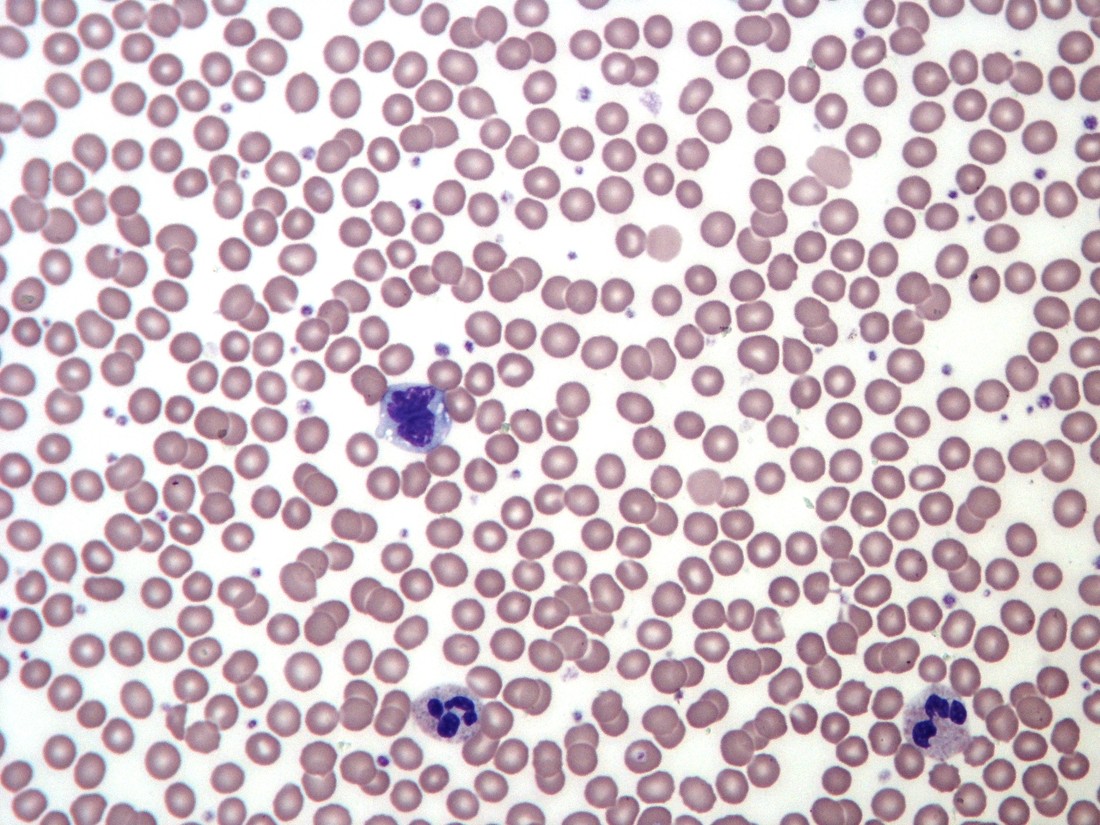
Connective tissues support, bind, protect and connect other body structures. Their cells are commonly separated by substantial , unlike the tightly packed cells of an epithelium. The matrix contains fibres and ground substance produced and maintained by cells. Fibroblasts make much of the matrix in many ordinary connective tissues. Blood, cartilage, bone and adipose tissue are specialised forms with very different appearances and functions. Calling them connective tissue describes a broad organisational family, not a claim that they all look or behave the same way.
Matrix determines mechanics
 Open diagram larger ↗
Fibres and hydrated ground substance
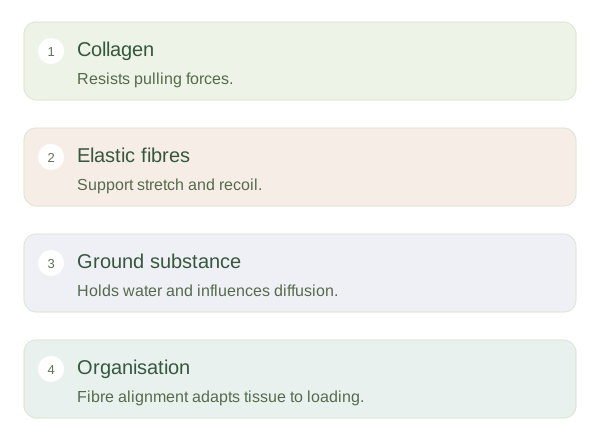
fibres provide tensile strength, helping tissue resist pulling forces. Elastic fibres allow stretch and recoil. Reticular fibres form fine supporting networks in selected organs. Ground substance contains water and molecules that influence hydration and the movement of substances. Its composition can make tissue flexible, compressible or more resistant to deformation. A tendon has densely aligned collagen suited to tension in a dominant direction. Loose connective tissue has more space for vessels, immune cells and exchange. Dense irregular connective tissue resists forces arriving from several directions.
Arrangement links to function
The same general ingredients produce different results when their proportions and alignment change. Think of reinforced fabric: thread type matters, but so does the weave. The matrix also sends mechanical and biochemical signals to cells, so it is not merely an inert scaffold. Injury and repair can alter both its quantity and organisation, creating scar tissue with different properties from the original. On a slide, identify fibres, cells and available space, then ask which forces or exchanges the tissue must handle. Colour alone is less informative than the pattern created by the matrix and its relationship to neighbouring structures.