Infection begins a biological conflict
An occurs when microorganisms enter, multiply and interact with the body in a way that can cause harm. Bacteria, viruses, fungi and other organisms use different mechanisms, so infection is not one single process. Local immune responses recruit cells, change blood flow and produce chemical signals to contain the threat. A lung infection, for example, may affect gas-exchanging tissue, while a urinary infection begins in a different anatomical system. The site matters because it determines both the initial damage and possible routes of spread.
From local trigger to systemic harm
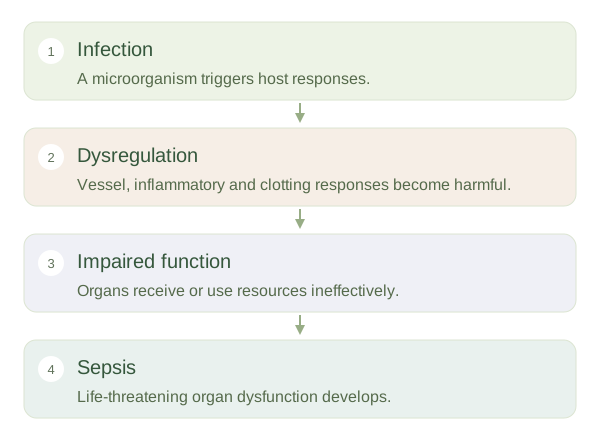 Open diagram larger ↗
When the response becomes harmful
occurs when the response to becomes dysregulated and causes life-threatening organ dysfunction. It is not simply another name for fever or bacteria in the blood. Inflammatory signalling, altered vessel behaviour, abnormal clotting and impaired cellular function can disturb oxygen delivery and tissue use of oxygen. Some blood vessels become more permeable, allowing fluid to leave the circulation, while blood flow can become uneven. The original infection may be local even though the consequences affect kidneys, brain, lungs or other distant organs.
Why several systems become involved
Organs depend on reliable circulation, oxygen and tightly controlled internal conditions. Disruption in one system can therefore worsen another: impaired kidney function alters fluid balance, while lung dysfunction limits oxygen transfer. Severe circulatory and metabolic abnormalities can produce septic shock, a particularly dangerous form of . Recognising severity requires clinical assessment rather than counting one symptom. Sepsis is a medical emergency, but not every infection develops into it. The conceptual lesson is that protective mechanisms can become damaging when their regulation fails; both the infectious trigger and the body’s response contribute to the final illness.