The location defines the problem
A urinary tract infection occurs when microorganisms cause infection in part of the urinary system. Bladder infection is called ; kidney infection is called . Most are caused by bacteria, often from the bowel, entering through the urethra and multiplying in the urinary tract. The shorter urethra in typical female anatomy can make ascending access easier, but infections can occur in any anatomy. An infection is not simply a sign of poor cleanliness: bacterial properties, anatomy, hormonal changes and drainage conditions can all matter.
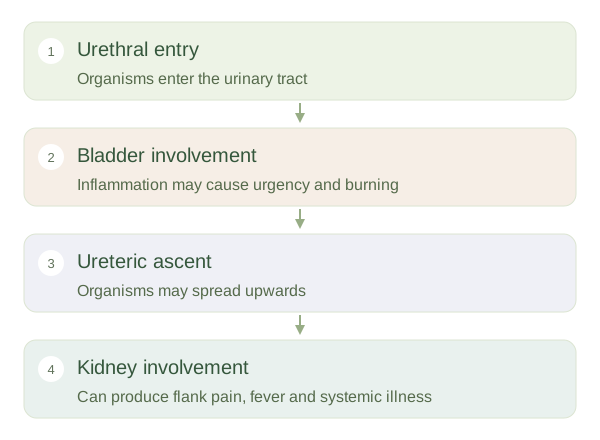
Possible ascending urinary infection
 Open diagram larger ↗
Inflammation produces symptoms
Bladder inflammation can cause burning with urination, urgency and frequent small voids. Irritated sensory pathways may signal a need to urinate even when the bladder is not full. Symptoms have other possible causes, so they do not prove bacterial infection on their own. Kidney infection may cause fever, flank pain and systemic illness. Urine normally flows downwards from the kidneys, but bacteria can sometimes ascend through the ureters. Obstruction or other abnormalities may increase the significance of an infection by interfering with normal urine clearance.
Tests need clinical interpretation
Urine tests can look for inflammatory cells, bacterial products or growth of organisms in culture. However, bacteria in a urine sample do not always mean a symptomatic infection; contamination and are important distinctions. Clinicians combine symptoms, risk factors and test results rather than treating every positive sample as the same problem. Kidney infection can be more serious than infection confined to the bladder, and urinary infection can sometimes contribute to sepsis. For learning, separate the route of entry, the affected site and the body’s inflammatory response. Those three ideas explain why urinary infections have different presentations and levels of concern.